Guy Bigland: Agree to Disagree
Wire bound hard cover | 17.2 x 1 x 13.5 cm
Guy Bigland | 2025
Digital Indigo Print on GF Smith Colorplan, Fedrigoni Splendorgel and Fedrigoni Sirio
Second edition of 50 copies
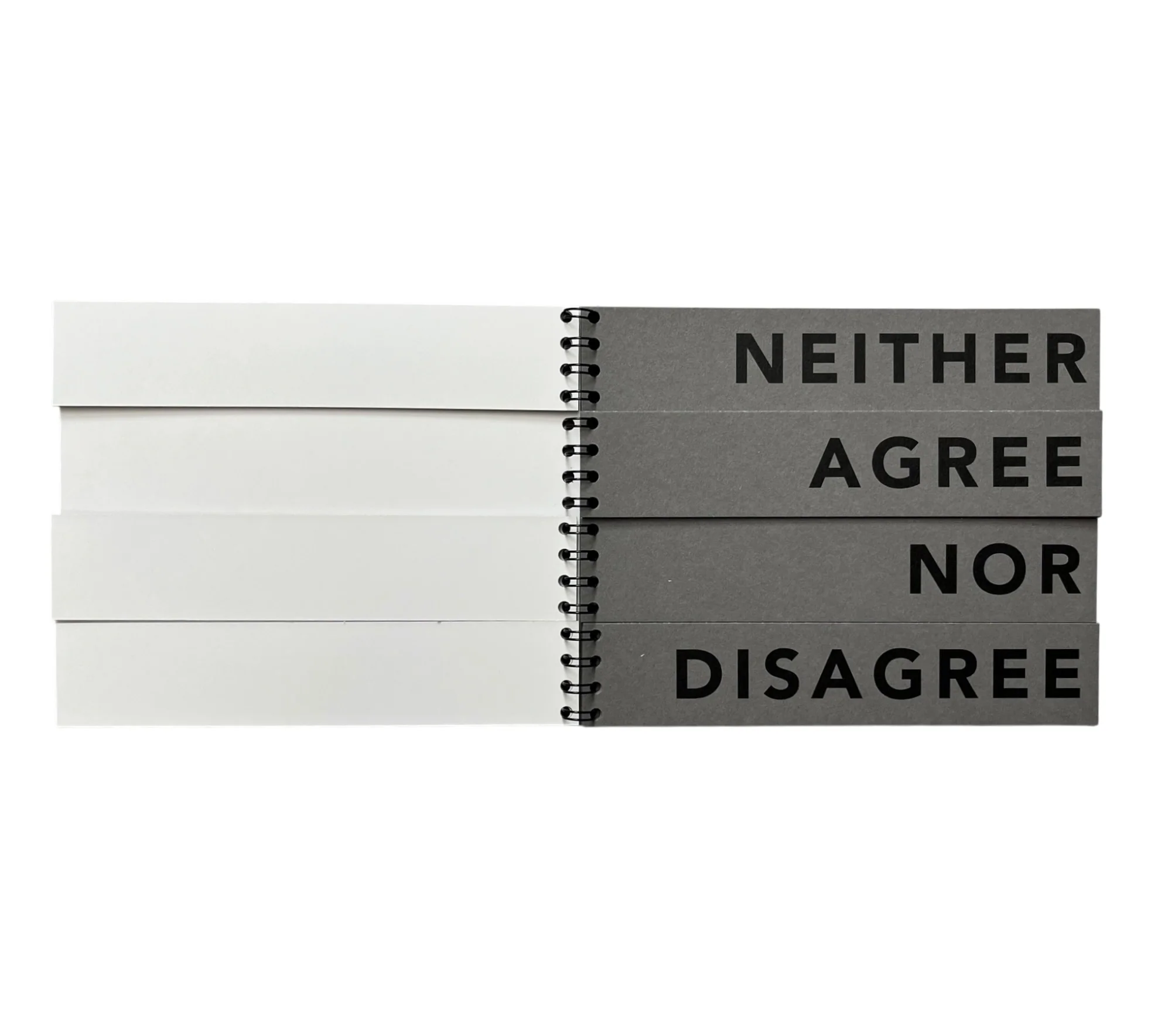
This book plays with the language used in questionnaires that require respondents to indicate their level of agreement or disagreement by selecting a response from a symmetric scale to capture the intensity of respondent's feelings for a given item. This method of constructing questionnaires is called the Likert scale - a psychometric scale named after its inventor, American social psychologist Rensis Likert, which is commonly used in research questionnaires. It is the most widely used approach to scaling responses in survey research.
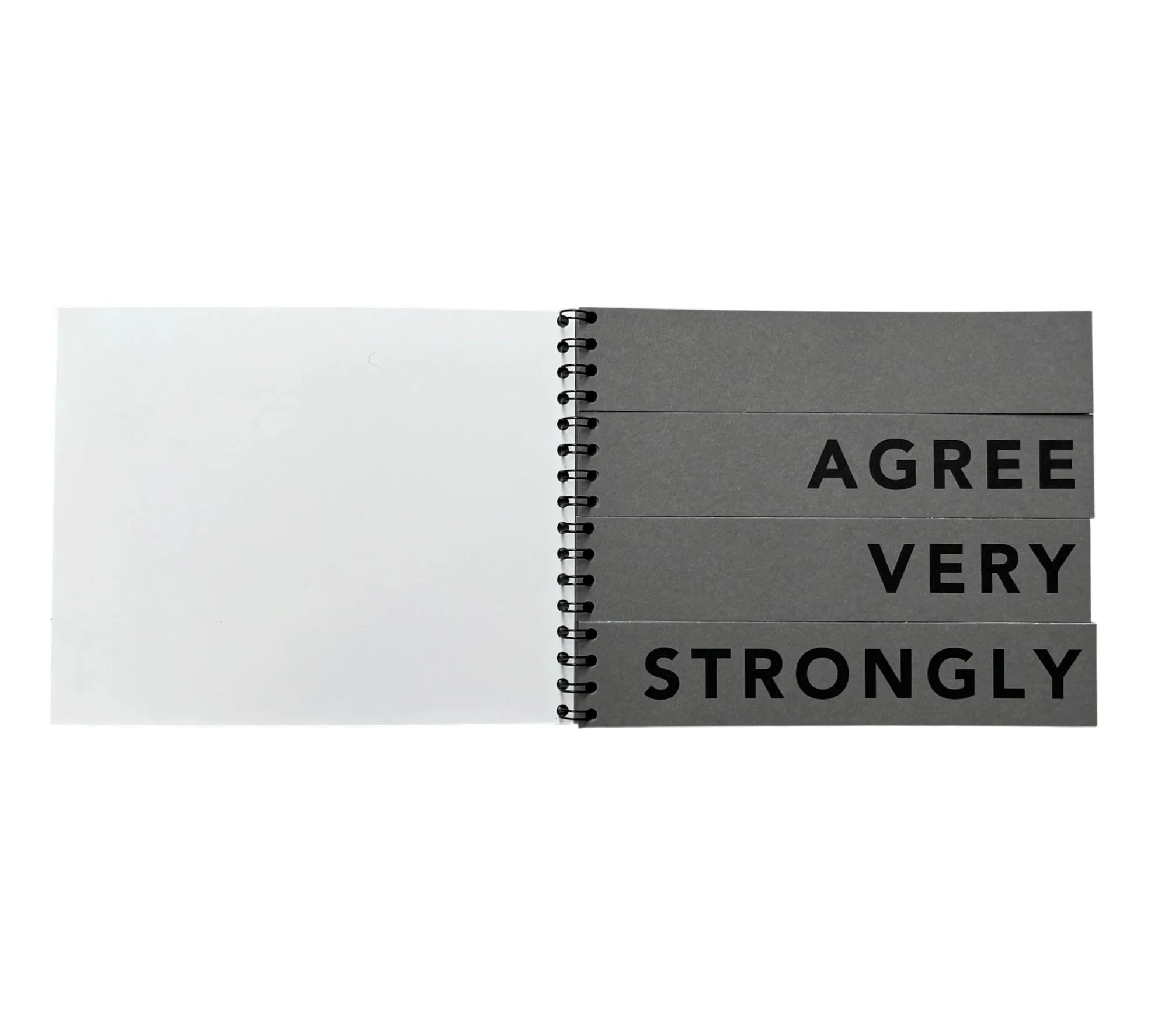
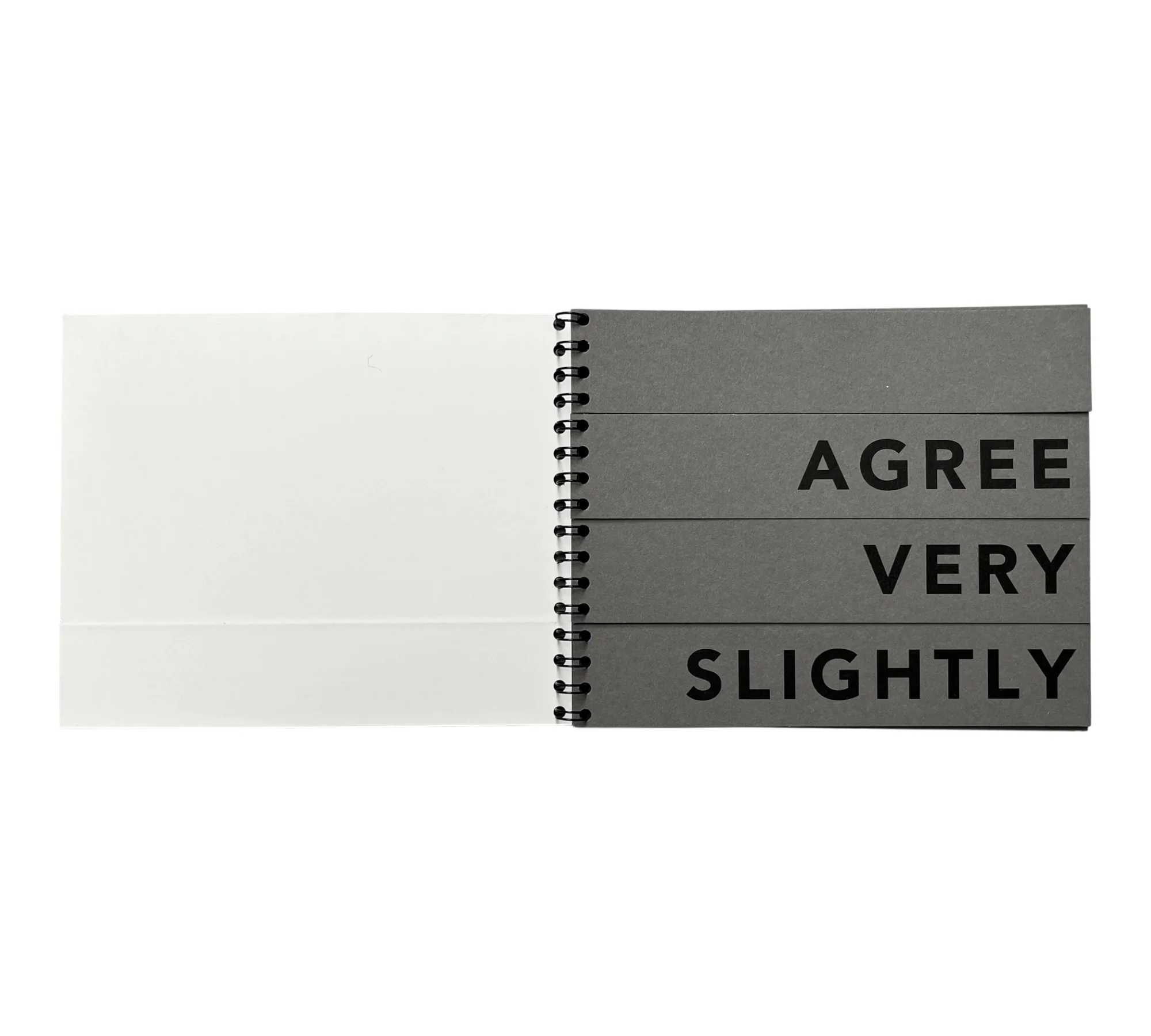
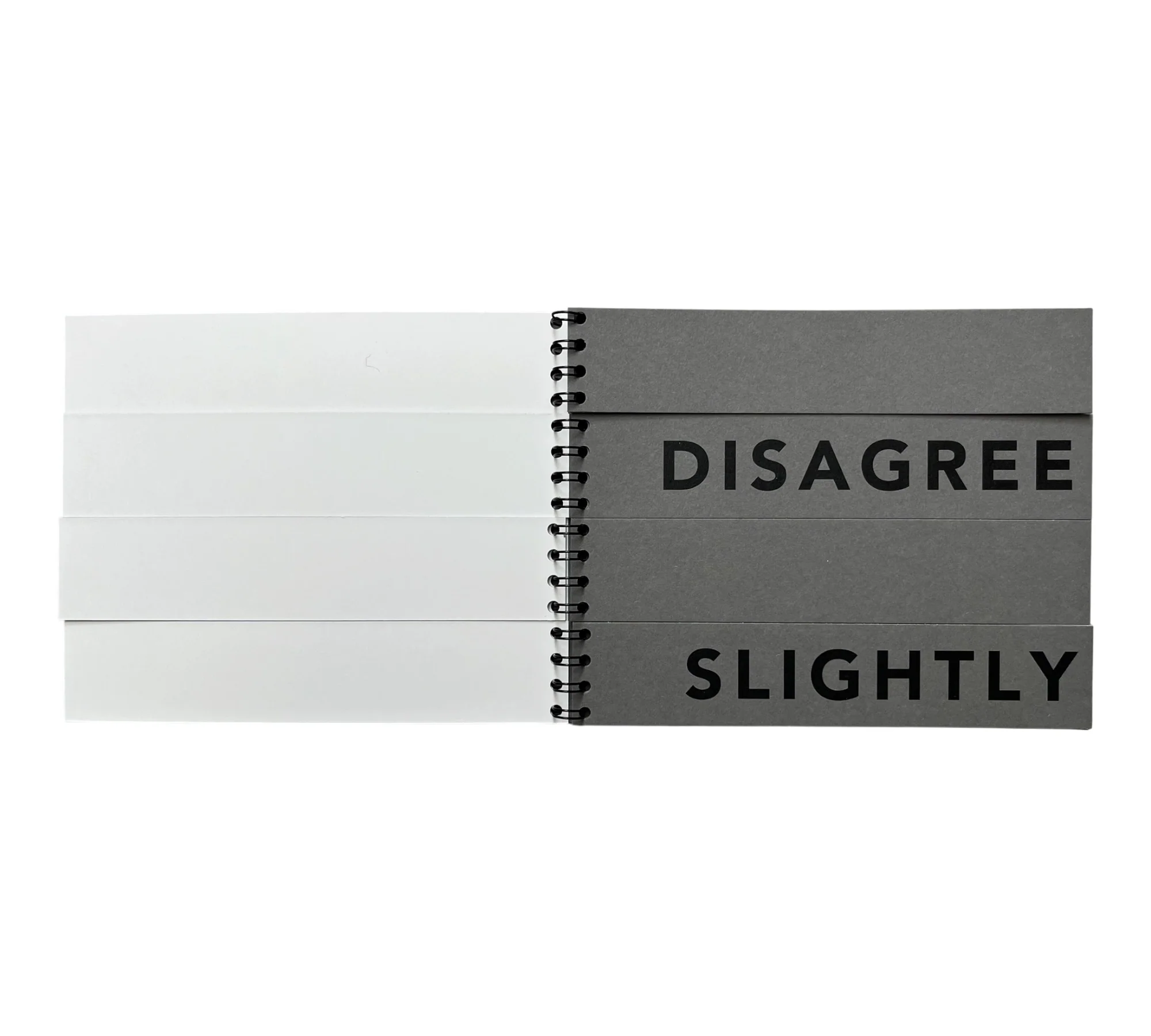
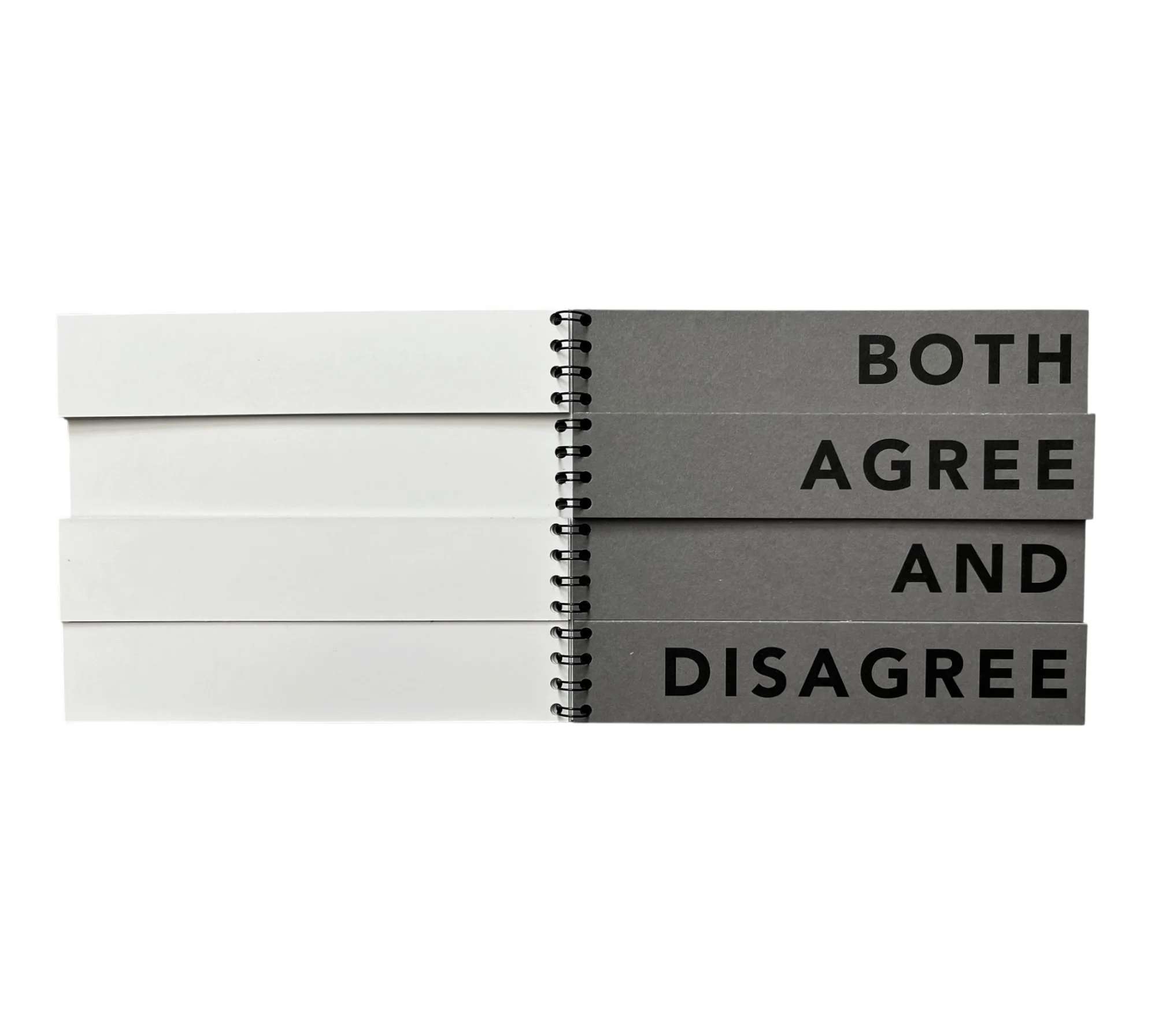
The pages are cut into four horizontal strips in the manner of an 'exquisite corpse' book, with one word on each strip. It looks as though it could be a tool for use in interview situations. By turning the pages different statements can be formed, as well as playful, nonsensical or un-grammatical phrases.
One additional option has been included that the Likert scale does not allow - BOTH AGREE AND DISAGREE.
The title of the book uses a phrase that refers to the resolution of a debate or quarrel whereby all parties tolerate but do not accept the opposing position(s).
Guy Bigland works with photography, text, books, print, digital media and painting to examine the mechanics of meaning, language and systems of order. His work is held in public and private collections in the UK (including Tate, V&A and the National Poetry Library), Europe and the USA.
Original: $20.30
-65%$20.30
$7.10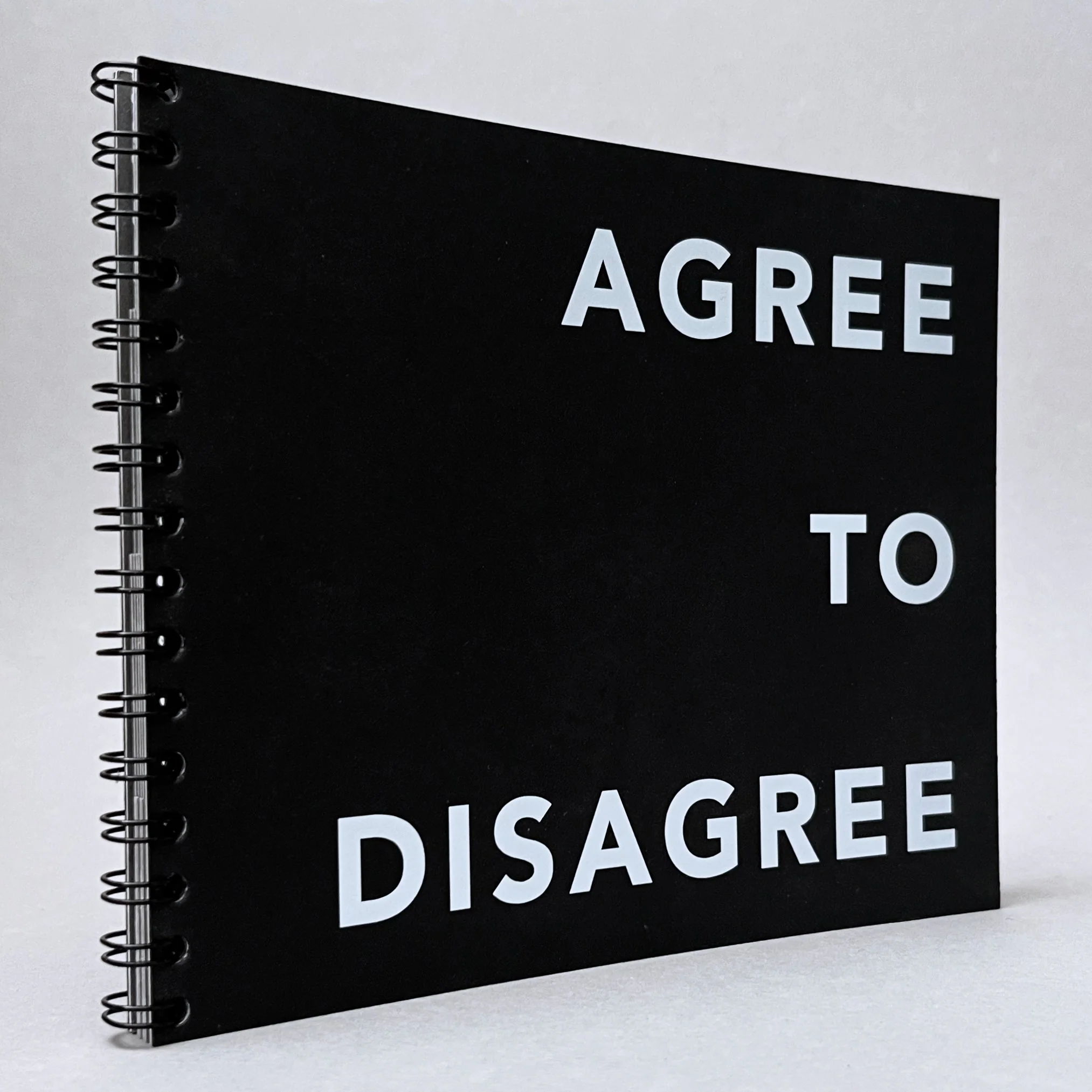
Description
Wire bound hard cover | 17.2 x 1 x 13.5 cm
Guy Bigland | 2025
Digital Indigo Print on GF Smith Colorplan, Fedrigoni Splendorgel and Fedrigoni Sirio
Second edition of 50 copies
This book plays with the language used in questionnaires that require respondents to indicate their level of agreement or disagreement by selecting a response from a symmetric scale to capture the intensity of respondent's feelings for a given item. This method of constructing questionnaires is called the Likert scale - a psychometric scale named after its inventor, American social psychologist Rensis Likert, which is commonly used in research questionnaires. It is the most widely used approach to scaling responses in survey research.
The pages are cut into four horizontal strips in the manner of an 'exquisite corpse' book, with one word on each strip. It looks as though it could be a tool for use in interview situations. By turning the pages different statements can be formed, as well as playful, nonsensical or un-grammatical phrases.
One additional option has been included that the Likert scale does not allow - BOTH AGREE AND DISAGREE.
The title of the book uses a phrase that refers to the resolution of a debate or quarrel whereby all parties tolerate but do not accept the opposing position(s).
Guy Bigland works with photography, text, books, print, digital media and painting to examine the mechanics of meaning, language and systems of order. His work is held in public and private collections in the UK (including Tate, V&A and the National Poetry Library), Europe and the USA.