The Eye of History: When Images Take Positions
Hardcover | 18.57 x 2.03 x 23.83 cm | 282 pp
MIT Press | 2018 | 9780262037877
The second book of the RIC Books series co-published by the MIT Press and The Image Centre at Toronto Metropolitan University, explores the interaction of aesthetics and politics in Bertolt Brecht's “photoepigrams.”
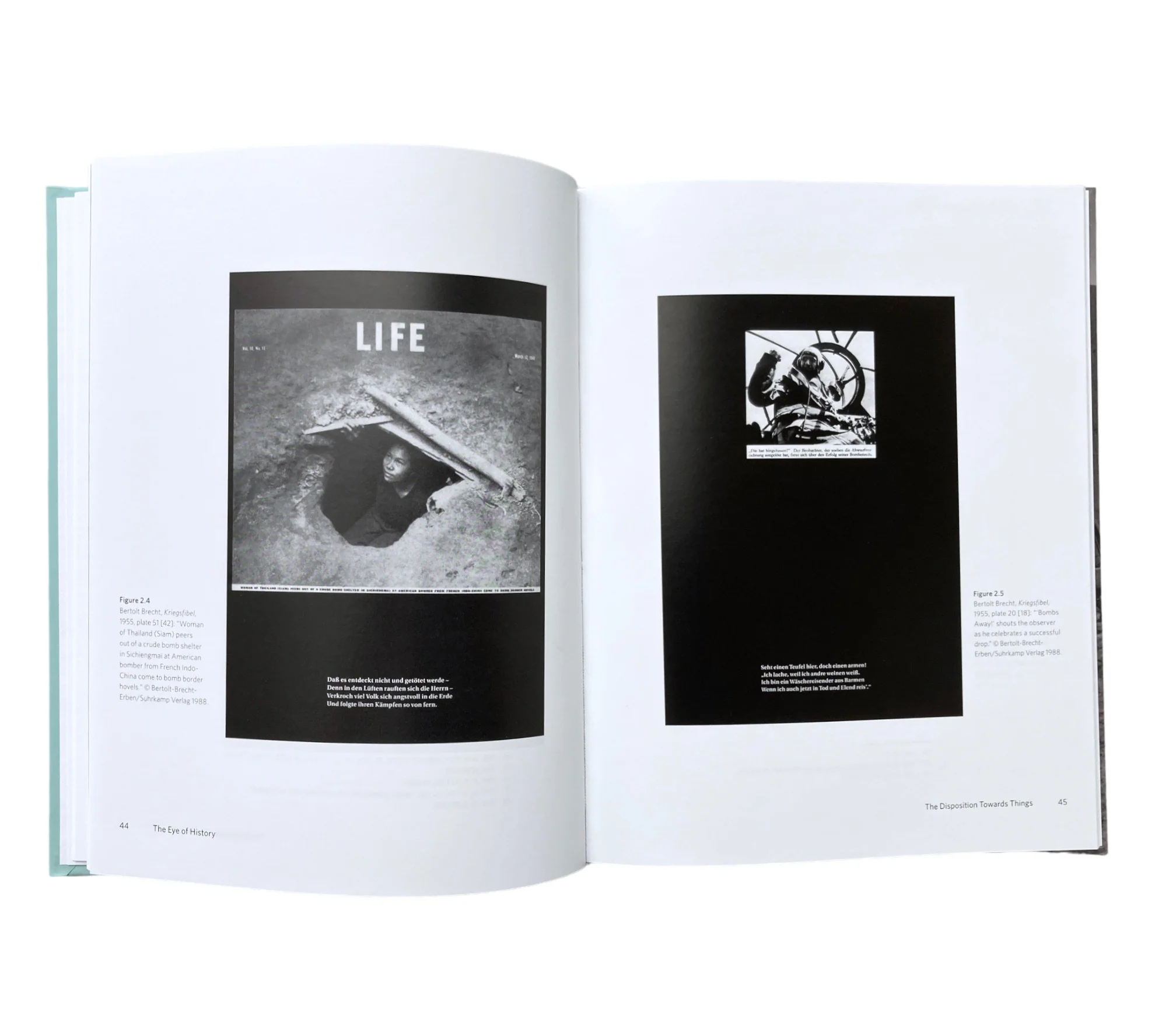
From 1938 to 1955, Bertolt Brecht created montages of images and text, filling his working journal (Arbeitsjournal) and his idiosyncratic atlas of images, War Primer, with war photographs clipped from magazines and adding his own epigrammatic commentary. In this book, Georges Didi-Huberman explores the interaction of politics and aesthetics in these creations, explaining how they became the means for Brecht, a wandering poet in exile, to “take a position” about the Nazi war in Europe. Illustrated with pages from the Arbeitsjournal and War Primer and contextual images including Raoul Hausmann's poem-posters and Walter Benjamin's drawings, The Eye of History offers a new view of important but little-known works by Brecht.
Didi-Huberman shows that Brecht took positions without taking sides; he used these montages to challenge the viewpoints of the press and propose other readings, to offer a stylistic and political response to the inescapable visibility of historical events enabled by the photographic medium. Brecht's montages disrupt and scrutinise this visibility by juxtaposing representations of war found in magazines with his own epigrams―a “documentary lyricism” that dismounts and remounts modern history. The montages created meaningful disorder, exposing the truth by disorganising―a process Didi-Huberman calls a “dialectic of the monteur.” These works are examples of “the eyes of history”―when seeing may simultaneously deepen and critique historical knowledge. The montages Didi-Huberman argues, are Brecht's most Benjaminian works.
Original: $20.30
-65%$20.30
$7.10


Description
Hardcover | 18.57 x 2.03 x 23.83 cm | 282 pp
MIT Press | 2018 | 9780262037877
The second book of the RIC Books series co-published by the MIT Press and The Image Centre at Toronto Metropolitan University, explores the interaction of aesthetics and politics in Bertolt Brecht's “photoepigrams.”
From 1938 to 1955, Bertolt Brecht created montages of images and text, filling his working journal (Arbeitsjournal) and his idiosyncratic atlas of images, War Primer, with war photographs clipped from magazines and adding his own epigrammatic commentary. In this book, Georges Didi-Huberman explores the interaction of politics and aesthetics in these creations, explaining how they became the means for Brecht, a wandering poet in exile, to “take a position” about the Nazi war in Europe. Illustrated with pages from the Arbeitsjournal and War Primer and contextual images including Raoul Hausmann's poem-posters and Walter Benjamin's drawings, The Eye of History offers a new view of important but little-known works by Brecht.
Didi-Huberman shows that Brecht took positions without taking sides; he used these montages to challenge the viewpoints of the press and propose other readings, to offer a stylistic and political response to the inescapable visibility of historical events enabled by the photographic medium. Brecht's montages disrupt and scrutinise this visibility by juxtaposing representations of war found in magazines with his own epigrams―a “documentary lyricism” that dismounts and remounts modern history. The montages created meaningful disorder, exposing the truth by disorganising―a process Didi-Huberman calls a “dialectic of the monteur.” These works are examples of “the eyes of history”―when seeing may simultaneously deepen and critique historical knowledge. The montages Didi-Huberman argues, are Brecht's most Benjaminian works.