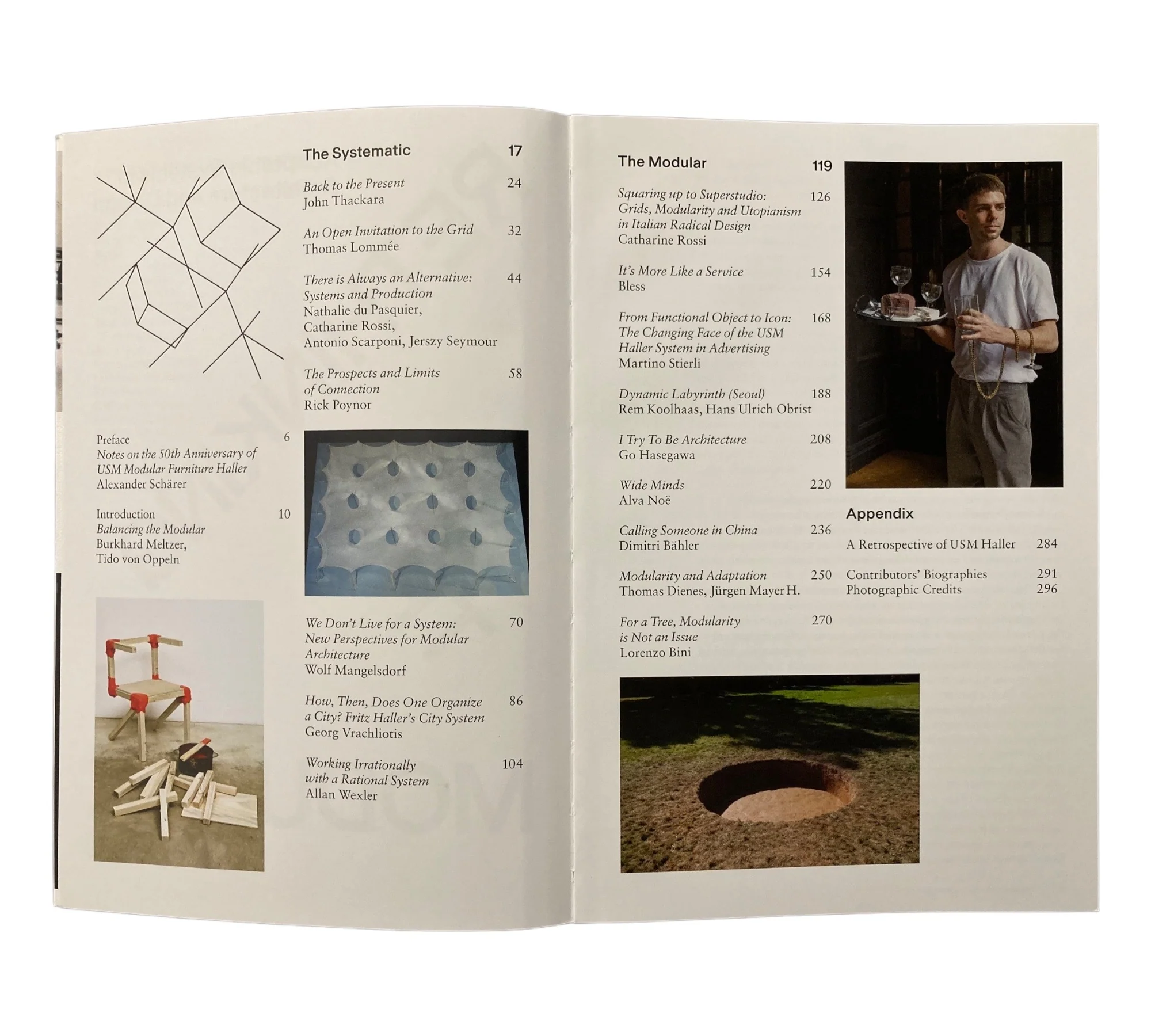
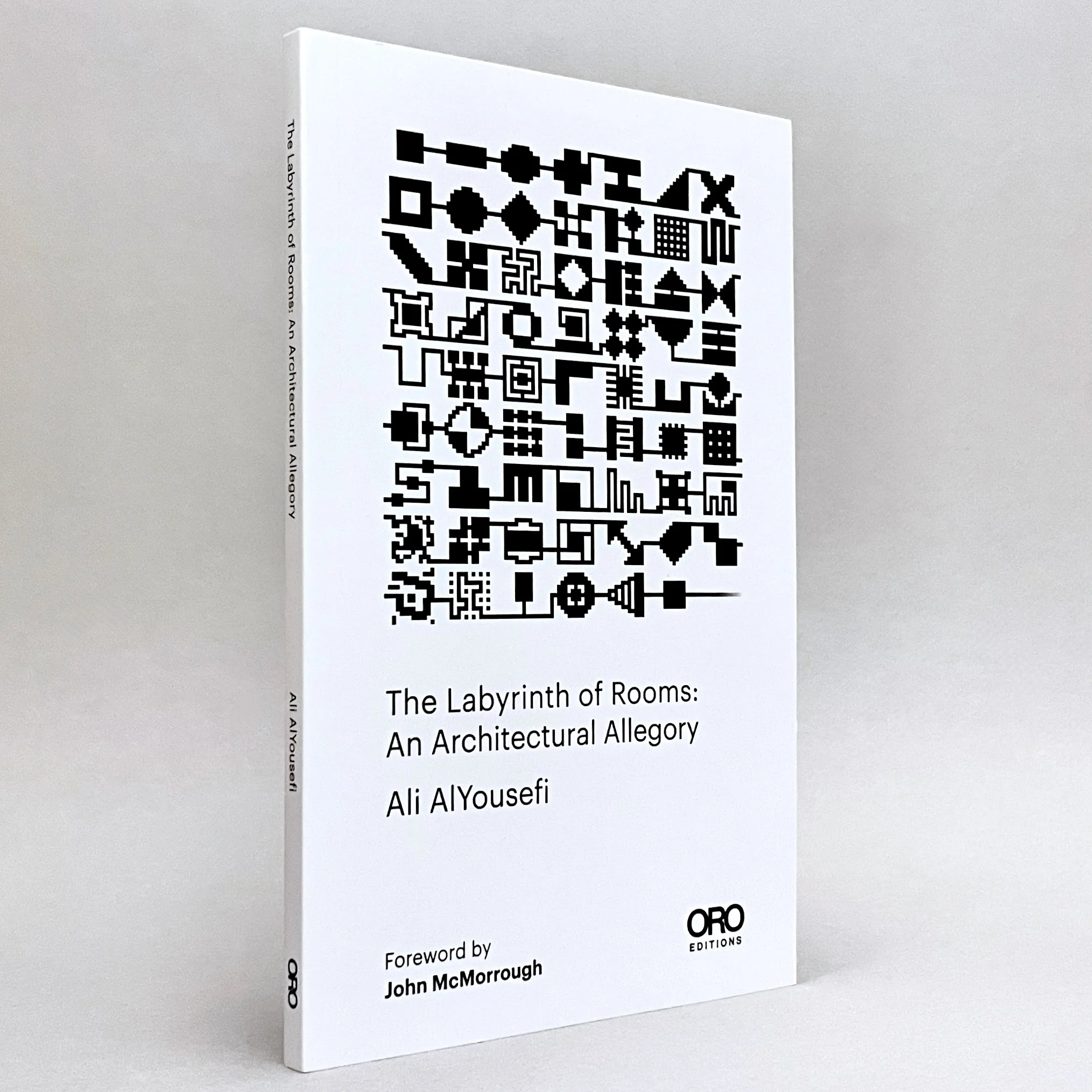
The Labyrinth of Rooms: An Architectural Allegory
Softcover | 12.7 x 1.27 x 20.32 cm | 80 pp
ORO Editions | 2024 | 9781957183725
The Labyrinth of Rooms is a story about how the shape of architecture can change the way we think, and how the shape of our thoughts can change the way we see architecture. Stated otherwise, the story conceives of the human life as a series of settings that stage the coevolution of mental space and physical space.
Human, the story's protagonist, can be any one of us, and their journey from the first room to the last room is the journey of a lifetime: it has its ups and downs, moments of clarity and moments of confusion, but overall it bends towards greater knowledge and wisdom.
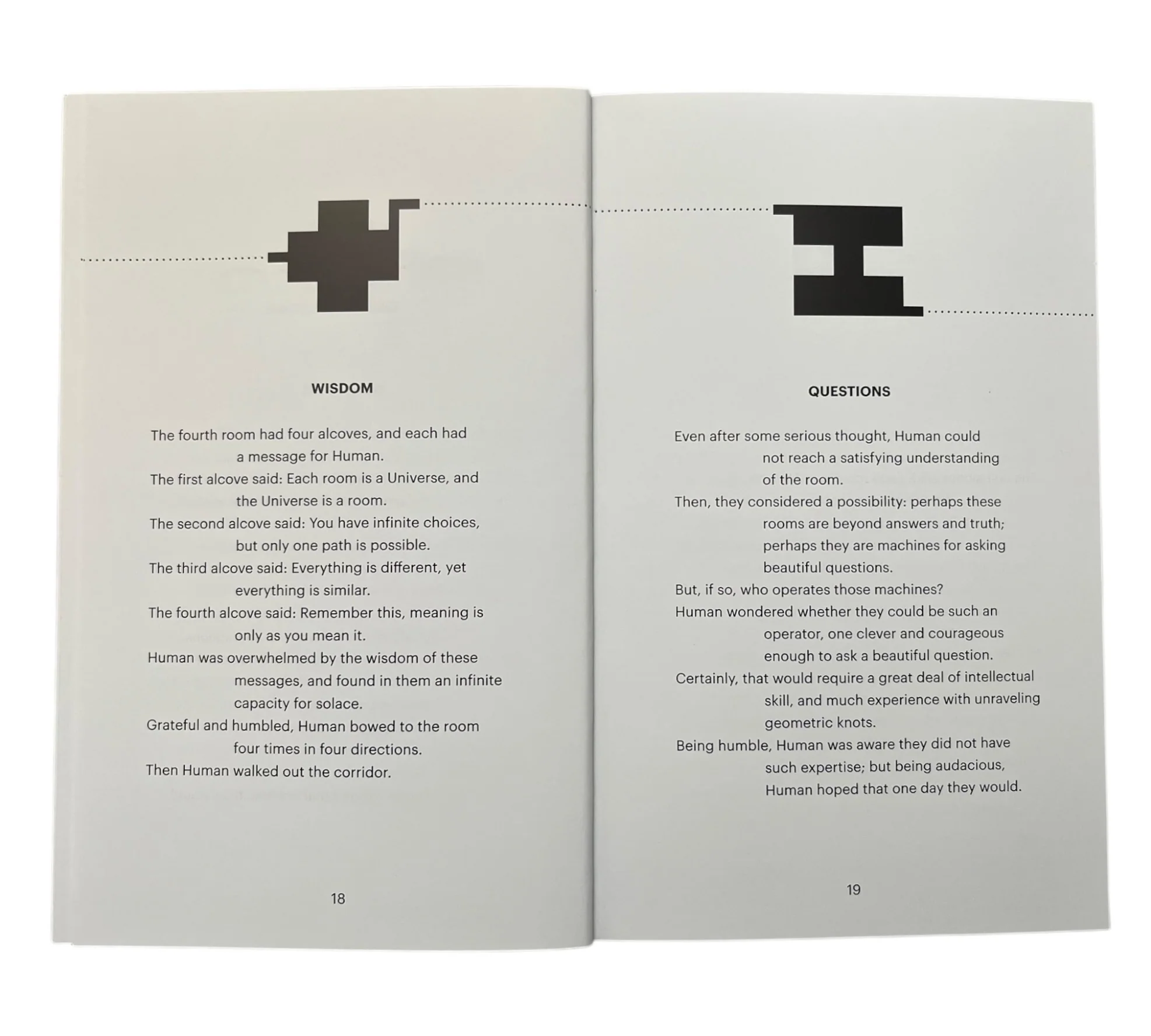
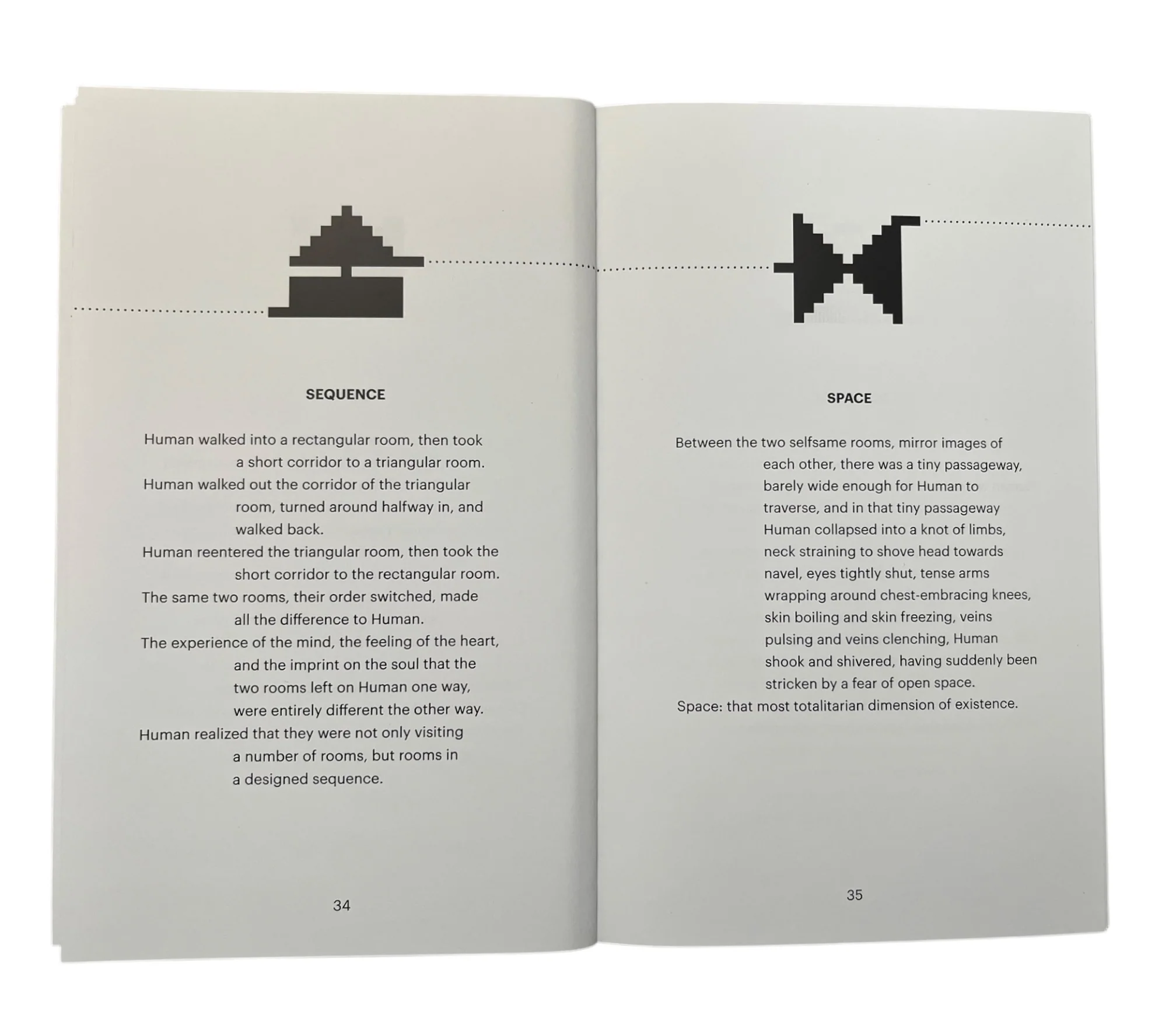
Human suddenly awakes in a square room with no memory of a prior life. A corridor leads them from that room to the next, then another, and so on until they reach the end of a 63-room labyrinth. As the journey progresses, Human contemplates their surroundings, studying the unique shape of each room and how it affects their thoughts, feelings, and actions.
To understand the significance of the rooms’ architecture, Human engages in different types of thinking: questioning why the rooms were designed as such, imagining situations the rooms can host, praising what they find geometrically pleasing, speculating about the nature of the labyrinth, and even complaining about their forced existence within it. This variety is reflected in the writing of the book, which intentionally juxtaposes different genres, including storytelling, philosophical reasoning, dialogues, and prose poetry.
The Labyrinth of Rooms follows a long tradition of architects using fictional stories to think about architecture, including Adolf Loos, Hassan Fathy, Archigram, Superstudio, Arata Isozaki, Jon Hejduk, Lebbeus Woods, Rem Koolhaas, etc.


Description
Softcover | 12.7 x 1.27 x 20.32 cm | 80 pp
ORO Editions | 2024 | 9781957183725
The Labyrinth of Rooms is a story about how the shape of architecture can change the way we think, and how the shape of our thoughts can change the way we see architecture. Stated otherwise, the story conceives of the human life as a series of settings that stage the coevolution of mental space and physical space.
Human, the story's protagonist, can be any one of us, and their journey from the first room to the last room is the journey of a lifetime: it has its ups and downs, moments of clarity and moments of confusion, but overall it bends towards greater knowledge and wisdom.
Human suddenly awakes in a square room with no memory of a prior life. A corridor leads them from that room to the next, then another, and so on until they reach the end of a 63-room labyrinth. As the journey progresses, Human contemplates their surroundings, studying the unique shape of each room and how it affects their thoughts, feelings, and actions.
To understand the significance of the rooms’ architecture, Human engages in different types of thinking: questioning why the rooms were designed as such, imagining situations the rooms can host, praising what they find geometrically pleasing, speculating about the nature of the labyrinth, and even complaining about their forced existence within it. This variety is reflected in the writing of the book, which intentionally juxtaposes different genres, including storytelling, philosophical reasoning, dialogues, and prose poetry.
The Labyrinth of Rooms follows a long tradition of architects using fictional stories to think about architecture, including Adolf Loos, Hassan Fathy, Archigram, Superstudio, Arata Isozaki, Jon Hejduk, Lebbeus Woods, Rem Koolhaas, etc.